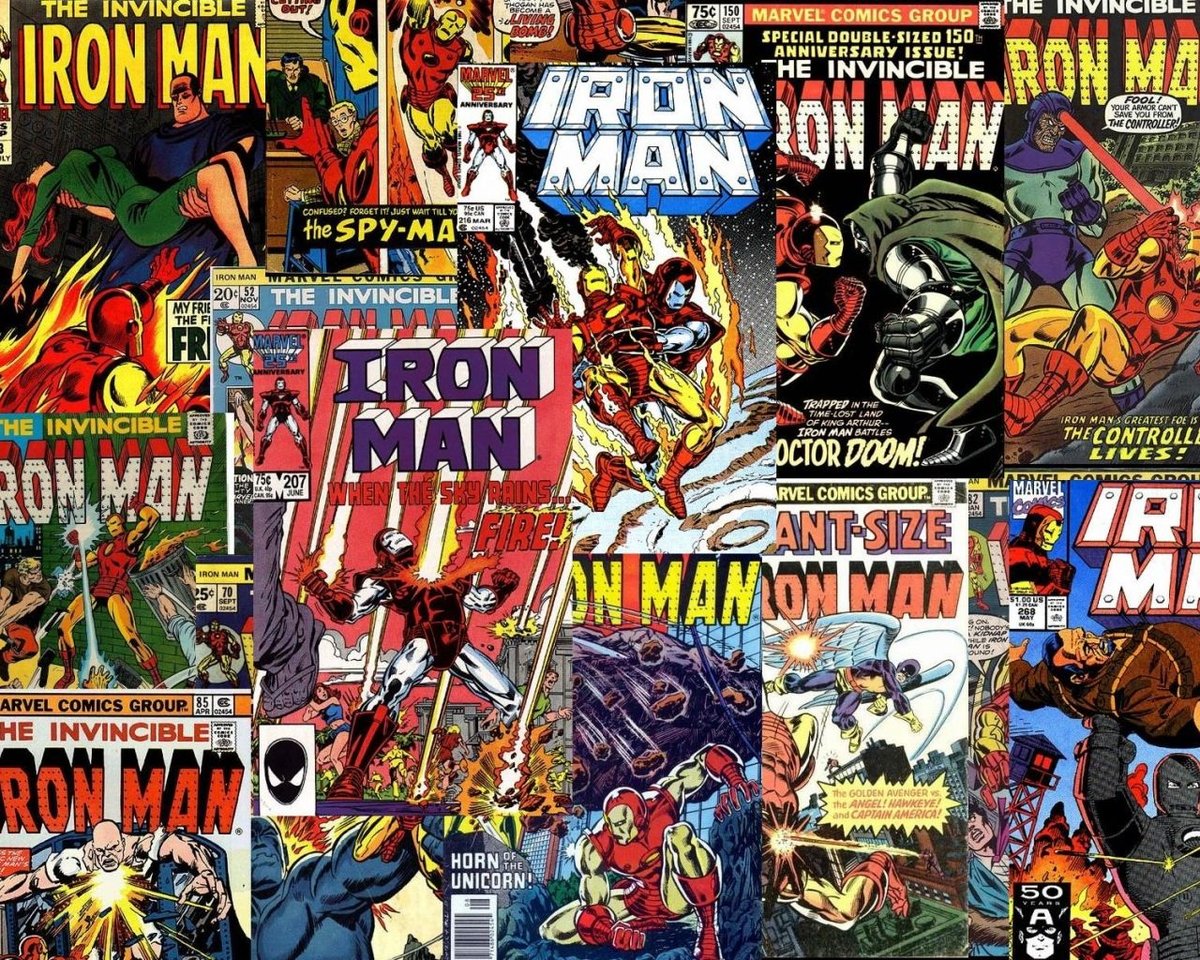
The enduring appeal of Iron Man isn't just about the charismatic genius Tony Stark or the cutting-edge technology he wields; it's profoundly rooted in the visual journey of his iconic armor. Diving into Classic Iron Man Comic Art offers a fascinating look at how artists shaped an armored hero, translating complex ideas of power, vulnerability, and technological marvel into captivating illustrations that have stood the test of time.
This isn't merely a historical retrospective; it's an exploration of design excellence, artistic ingenuity, and the subtle ways visual storytelling builds a legend. From the clunky, gray suit of the early Silver Age to the sleek, modular designs that defined later decades, the evolution of Iron Man's look is a masterclass in comic book artistry.
At a Glance: What Makes Classic Iron Man Art So Special?
- Pioneering Design Evolution: Witness the transformation of the armor from a crude life-support system to an elegant, powerful symbol.
- Iconic Artistic Voices: Discover the signature styles of artists like Don Heck, Gene Colan, George Tuska, and Bob Layton, who each left an indelible mark.
- Form Meets Function: Understand how the art visually communicated the suit's capabilities and Tony Stark's genius.
- Emotional Depth Through Visuals: See how artists conveyed Tony's internal struggles and humanity despite the metallic shell.
- Lasting Influence: Recognize the foundational artwork that continues to inspire modern interpretations across all media.
The Genesis of an Icon: From Clunky Grey to Golden Avenger
When Stan Lee, Don Heck, and Jack Kirby first brought Iron Man to life in Tales of Suspense #39 (1963), the initial design was a far cry from the sleek red and gold we know today. Tony Stark's original armor was a bulky, gunmetal grey, conceived as a literal iron lung to keep his shrapnel-damaged heart beating. This stark, utilitarian look immediately conveyed the dire circumstances of his creation – less hero, more survival mechanism.
Don Heck, the primary artist for Iron Man's early adventures, was instrumental in this foundational phase. His clean lines and clear storytelling made the mechanical nature of the suit understandable, even as it was quickly evolving. The grey suit, while brief, established Iron Man as a hero born of necessity and innovation, themes that would remain central to his character.
The rapid transition to the now-iconic red and gold armor, first hinted at in Tales of Suspense #40 and fully unveiled in #48, was a masterstroke. This bold color scheme, credited to Heck and colorist Stan Goldberg, transformed Iron Man from a monstrous metallic figure into a vibrant, heroic presence. It was a visual declaration of his superhero status, cementing his place alongside Captain America and Thor as a core Marvel Avenger.
Shaping the Suit: Defining Eras and Iconic Artists
The "classic" period of Iron Man comic art spans several decades, each marked by distinct artistic styles and technological advancements within the narrative. Understanding these eras and the artists who defined them is key to appreciating the depth of Iron Man's visual legacy.
Silver Age Grandeur (1960s): Precision and Persona
The 1960s saw Iron Man find his footing, with artists meticulously crafting his persona and the capabilities of his suit.
Don Heck: The Architect of Iron
Don Heck's early work laid the essential groundwork. His Iron Man was often depicted with a sense of grounded realism, his lines clear and direct. Heck focused on the functionality of the suit, showing the repulsor rays and flight systems in a way that felt almost plausible. He also excelled at conveying Tony Stark’s playboy lifestyle and the dramatic contrast between his public persona and his secret armored life. Heck’s art often depicted Tony with a certain suave sophistication, making the "man in the machine" feel real.
Gene Colan: Dynamic Shadows and Emotional Depth
When Gene Colan took over art duties, he brought a dramatic shift in style. Colan’s Iron Man was fluid, dynamic, and imbued with a palpable sense of mood. Known for his "camera-eye" perspective and masterful use of shadows, Colan made the armored Avenger feel both powerful and, at times, incredibly vulnerable. His Iron Man moved with a grace that belied his metallic form, often appearing in dramatic poses that amplified the emotional weight of Tony’s personal battles. Colan’s art humanized the armor, allowing readers to feel Tony’s internal turmoil even through the helmet.
Bronze Age Refinement (1970s): Industrial Might and Personal Stakes
The 1970s saw Iron Man grapple with more complex personal demons and the increasing industrial might of his creations, reflected in the art.
George Tuska: The Industrial Standard
George Tuska became one of Iron Man's most prolific artists, defining much of his look through the 1970s. Tuska’s style was characterized by a more robust, almost "heavy metal" depiction of the armor. His Iron Man felt substantial, powerful, and capable of taking a hit. Tuska was excellent at rendering machinery and explosions, bringing a gritty, industrial realism to Iron Man's world. His art emphasized the sheer power and durability of the suit, making it feel like a true weapon in Tony Stark's arsenal, yet still agile enough for heroic action.
John Romita Jr.: Raw Energy and Evolving Power
John Romita Jr.'s early work on Iron Man showcased a burgeoning talent for dynamic action and raw energy. His figures were often more angular and powerful, hinting at the kinetic potential within the suit. Romita Jr. brought a fresh, contemporary feel to Iron Man, pushing the boundaries of action sequencing and panel composition. His art foreshadowed the more intense, high-stakes narratives that would come to define the hero.
The '80s and '90s Evolution: Modular Designs and New Horizons
The 1980s and early 1990s were a golden era for Iron Man's visual evolution, introducing some of the most beloved and influential designs.
Bob Layton: The Definitive Architect
Bob Layton's artistic and co-plotting contributions, especially during the "Demon in a Bottle" storyline, are considered by many to be the zenith of Classic Iron Man Comic Art. Layton refined the armor, making it sleeker, more streamlined, and visually more advanced than ever before. His attention to detail, particularly in the suit's various functions and components, made it feel incredibly real and desirable. Layton's Iron Man was powerful, elegant, and perfectly balanced, setting a benchmark for all subsequent designs. He made the armor feel like a natural extension of Tony Stark, rather than just a costume.
Mark Bright: Dynamic and Detailed
Mark Bright, often paired with Layton on inks, continued this legacy with his clean lines and strong sense of perspective. Bright’s Iron Man was consistently powerful and detailed, often showing the wear and tear of battle, adding to the realism. His work further solidified the "classic" look established by Layton.
John Byrne: Power and Precision
John Byrne's contributions to Iron Man, though perhaps less extensive than others, still left a significant mark. His characteristic precision and powerful figure work made the armor look formidable. Byrne often emphasized the technological complexity and sheer might of the suit, depicting Iron Man with an almost intimidating presence.
Dale Keown & Joe Quesada: Modern Sensibilities
As the 1990s progressed, artists like Dale Keown and Joe Quesada brought a more muscular, often exaggerated aesthetic to Iron Man. Keown's style was characterized by powerful, heavily muscled figures, giving Iron Man a truly imposing physical presence. Quesada, with his dynamic layouts and detailed rendering, pushed the boundaries of visual storytelling, making Iron Man feel both contemporary and deeply rooted in his classic origins. This era saw the introduction of more modular and specialized armor designs, reflecting a shift towards more high-tech, adaptable suits.
Anatomy of an Icon: Dissecting the Design Philosophy
Classic Iron Man Comic Art isn't just about drawing a metal suit; it's about a consistent design philosophy that has evolved while maintaining core tenets.
Form Follows Function: The Visual Language of Technology
Every line, every plate, every vent in Iron Man's classic armor was designed to suggest purpose. Artists like Bob Layton excelled at making the suit look functional. You could almost infer where the power cells were, how the repulsors fired, or how the flight stabilizers worked, purely from the visual cues. This approach made the technology feel tangible and exciting, grounding the fantastical elements in a semblance of scientific possibility. The artists created a visual lexicon for advanced engineering, even when the science was purely fictional.
The Face Behind the Mask: Expressing Humanity Through Metal
Perhaps one of the greatest challenges for Iron Man artists is conveying emotion and personality when the main character is hidden behind a metallic helmet. Classic Iron Man artists mastered this through subtle techniques:
- Body Language: Dynamic posing that expressed confidence, defiance, despair, or determination.
- Helmet Angle and Eye Slits: The way the helmet was angled, or how light glinted off the eye slits, could suggest focus, anger, or even a sense of weariness.
- Contextual Storytelling: The immediate aftermath of a battle, or the contrast of the armored Avenger against a devastated landscape, could speak volumes about Tony's inner state. Even without seeing his face, you felt his struggle.
Color and Materiality: The Red and Gold Legacy
The red and gold scheme isn't just aesthetically pleasing; it's symbolic. Red signifies power and passion, while gold evokes wealth, prestige, and heroism. Artists carefully rendered the metallic sheen, using highlights and shadows to give the armor a three-dimensional, weighty feel. The energy effects of repulsor rays, uni-beams, and boot jets were often rendered in vibrant blues and yellows, creating a stark contrast that made them pop off the page. This consistent color palette became instantly recognizable, synonymous with the character and his heroic ideals.
Dynamic Posing and Action: Making Metal Move
A suit of armor, by its nature, can feel rigid. Yet, classic Iron Man artists consistently made him one of the most dynamic heroes in comics. They achieved this through:
- Exaggerated but Believable Anatomy: Even though it's armor, artists often implied the musculature beneath, giving the suit a powerful, athletic form.
- Kinetic Lines and Motion Blurs: Speed lines and strategically placed blurs conveyed rapid movement and the force of his actions.
- Impactful Panel Composition: Thoughtful layouts and angles emphasized the force of his punches, the speed of his flight, and the devastation of his attacks.
Beyond the Armor: Storytelling Through Art
Great comic art doesn't just show you what's happening; it makes you feel it. Classic Iron Man Comic Art excelled at telling stories that resonated deeply, often through purely visual means.
Emotional Resonance and Tony's Struggles
Tony Stark is a flawed hero, constantly battling alcoholism, corporate intrigue, and personal demons. Artists frequently used visual cues to amplify these struggles. A disheveled Tony, a crumpled suit after a devastating fight, or the isolated figure of Iron Man against a vast, empty backdrop could eloquently convey his vulnerability and internal conflicts, even when the dialogue was sparse. The art served as a direct window into Tony's mind, making his victories and defeats feel personal.
World-Building: Stark Industries and Beyond
The artists didn't just draw Iron Man; they built his world. The sleek, futuristic designs of Stark Industries, the bustling streets of New York, or the alien landscapes he traversed were all rendered with detail and consistency. This world-building was crucial in making Iron Man's adventures feel expansive and real, enhancing the immersion for the reader.
Impact on Character Arc: Visualizing Evolution
As Tony Stark grew and changed, so did his armor – and the way it was drawn. The shift from a more blocky, utilitarian suit to sleeker, more advanced designs wasn't just aesthetic; it reflected Tony's own evolution as an inventor and a hero. A damaged suit wasn't just superficial; it often mirrored Tony's own emotional wounds or the price of his heroism. This visual progression added another layer to his character arc, making the art an integral part of the narrative.
Appreciating the Masters: What to Look For in Classic Iron Man Art
When you delve into the rich history of Classic Iron Man Comic Art, paying attention to specific details can deepen your appreciation:
- Line Work: Observe the thickness, fluidity, and precision of the lines. Does the artist use bold, heavy lines for power, or delicate, thin lines for detail?
- Panel Composition: How do panels guide your eye? Are there dramatic angles, close-ups, or wide shots that enhance the storytelling?
- Character Expression: Even with the helmet on, look at the implied posture, body language, and surrounding context to decipher Tony's emotions. When he's out of the suit, notice the nuanced facial expressions.
- Rendering of Technology: Marvel at the detail artists put into the suit's mechanics, the environment, and other gadgets. Does it feel believable and advanced for its time?
- Background Details: Don't just focus on the foreground. Richly detailed backgrounds contribute to the atmosphere and sense of place.
- Color Palette: How does the coloring contribute to the mood, emphasizing action, despair, or triumph?
- Motion and Energy: How do artists convey speed, impact, and the sheer power of Iron Man's repulsors or flight?
Common Misconceptions About Classic Iron Man Art
Despite its profound influence, classic comic art, including Iron Man's, can sometimes be misunderstood.
"It's Just Robots Fighting."
This couldn't be further from the truth. While the armor is central, the best Iron Man artists always found ways to highlight the man inside. The art consistently reminded readers of Tony Stark’s humanity, his flaws, and his genius. The suit isn't just a combat vehicle; it's an extension of his will, a prison, and often a burden. The visual narrative always balances technological spectacle with human drama.
"All the Suits Look the Same."
While the core red and gold palette and basic silhouette are consistent, the details are anything but. From Don Heck's comparatively simple design to Bob Layton's meticulously rendered modular armor, and the more aggressive aesthetics of the 90s, the suit underwent constant evolution. Each artist brought their own interpretation, adding subtle (and sometimes not-so-subtle) changes to the helmet, chest plate, gauntlets, and boot jets. View Iron Man pictures to see the incredible variety across different eras and artists.
"Modern Art is Always Better."
While contemporary comic art benefits from advanced printing techniques and digital tools, dismissing classic art as "primitive" misses the point. Classic Iron Man artists, working with fewer resources and tighter deadlines, often displayed incredible ingenuity and draftsmanship. Their work established the visual language and iconic imagery that continues to inspire. Appreciating classic art means recognizing its context, its technical mastery, and its foundational importance, not comparing it unfairly to modern sensibilities. It’s about understanding the progression and distinct beauty of each era.
The Enduring Legacy of Classic Iron Man Art
The impact of Classic Iron Man Comic Art extends far beyond the comic book pages. The visual language established by these artists forms the bedrock of every subsequent iteration of the character, from animated series to blockbuster films. Jon Favreau, director of the first Iron Man movie, explicitly cited Bob Layton's designs as a primary influence for the live-action Mark III armor, a testament to the timeless appeal and functional elegance of the classic artwork.
These early designs established the very identity of the armored Avenger: the sleek helmet, the arc reactor on the chest, the repulsor gloves, and the vibrant red and gold scheme. Without the artistic innovations and consistent visual storytelling of the classic era, Iron Man simply wouldn't be the global icon he is today.
Your Guide to Exploring Classic Iron Man Art
Ready to dive deeper and appreciate this rich artistic heritage? Here’s how you can start your own journey:
- Start with the Beginnings: Pick up trade paperbacks or digital collections of Tales of Suspense and the early issues of The Invincible Iron Man. Witness Don Heck's genesis and Gene Colan's dynamic contributions firsthand.
- Seek Out Bob Layton's Runs: For many, Layton’s work in the late 70s and 80s (especially with David Michelinie) is the definitive visual experience of Iron Man. Look for collections containing the "Demon in a Bottle" storyline and the early modular armor designs.
- Explore Artist Spotlights: Many comic art books and online resources focus on individual artists. Seek out retrospectives on George Tuska or Gene Colan to appreciate their unique contributions.
- Visit Online Archives: Websites dedicated to comic book history often host extensive galleries where you can compare different artists' takes on Iron Man over the decades. This allows you to visually track the evolution and identify your own favorite styles.
By engaging with Classic Iron Man Comic Art, you're not just looking at pictures; you're connecting with a vibrant history of visual storytelling that built one of Marvel's most complex and enduring heroes. It’s a journey into the minds of the artists who, panel by panel, forged a legend in iron and gold.