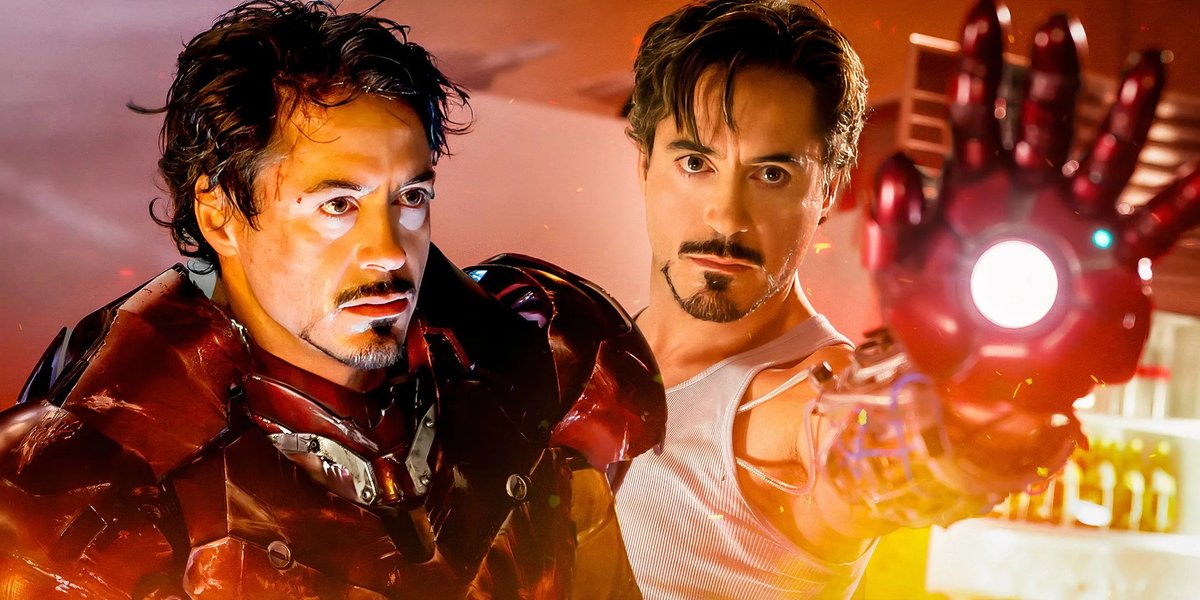
The iconic metallic clang, the whirring repulsors, the sheer spectacle of Iron Man soaring through the sky – it's all so real on screen, isn't it? But peel back the layers, and you'll find that behind-the-scenes Iron Man photos offer a fascinating glimpse into the ingenious blend of practical effects, cutting-edge CGI, and human ingenuity that brought Tony Stark's world to life. These aren't just snapshots; they're revelations that can profoundly change how you view these groundbreaking films.
At a Glance: Unmasking the Iron Man Magic
- Beyond the Suit: See how actors like Robert Downey Jr. often donned only parts of the suit, or even just motion-capture dots, to bring Iron Man to the screen.
- Green Screen Everywhere: Understand the sheer scale of the digital wizardry required, with vast green stages transforming into bustling cityscapes or alien worlds.
- Practical Meets Digital: Discover how real rubble, physical sets, and wirework were seamlessly integrated with computer-generated elements.
- Stan Winston's Lasting Legacy: Learn about the legendary special effects artist who designed the original Iron Man suit, setting the standard for the entire MCU.
- The Actor's Challenge: Appreciate the skill required for actors to perform complex emotional and action scenes in sparse, green-screen environments.
The Unseen Genius: What Really Builds Iron Man?
Tony Stark's journey, arguably the bedrock of the entire Marvel Cinematic Universe, concluded its solo film run years ago. While his story gracefully continued across the sprawling MCU landscape in blockbusters like Avengers and Captain America: Civil War, the foundational magic that created his world remains as captivating as ever.
What you see as a fully-armored hero battling villains or navigating impossible scenarios often begins as something far less glamorous. Behind-the-scenes images are a treasure trove, revealing the intricate dance between extensive green screen sets, meticulously crafted CGI, robust practical effects, and the precise art of motion capture. It’s a testament to the thousands of artists and technicians who turn raw footage into cinematic legends. You can View Iron Man pictures from throughout the trilogy to truly grasp this transformation.
Iron Man (2008): Where it All Began with Practical Magic
The very first Iron Man film wasn't just a movie; it was a gamble that paid off, launching a cinematic universe that redefined Hollywood. And at its heart, a significant amount of that initial success was rooted in tangible, on-set practical effects, spearheaded by a legend.
Stan Winston, a four-time Academy Award-winning special effects guru, left his indelible mark on the film industry with iconic designs like the Predator, the Terminator, and the Queen Alien. Iron Man marked one of his final, profound contributions before his passing, bringing his unparalleled expertise to the creation of the classic Iron Man suit design. These were physical suits, detailed and weighty, worn by stunt doubles or even RDJ himself in certain close-ups, giving the film a grounded, visceral feel that helped audiences believe in this high-tech hero from the start.
Director Jon Favreau, with his clear vision, oversaw the creation of the monstrous Iron Monger armor, a formidable practical suit that Jeff Bridges' Obadiah Stane inhabited. Bridges' portrayal of Stane is often cited as an underrated villain, and the physical presence of the Iron Monger suit certainly amplified his menace on screen, proving that sometimes, a tangible threat is the most impactful.
Iron Man 2 (2010): Expanding the Armor and the Universe
With the success of the first film, Iron Man 2 set out to broaden Tony Stark's world, introducing new allies and more complex action sequences. A key draw for fans was the introduction of James "Rhodey" Rhodes in his own armored suit, War Machine, now played by Don Cheadle. This addition hinted at the rich "Armor Wars" storyline from the comics, promising more armored action.
Behind-the-scenes photos from Iron Man 2 vividly show Robert Downey Jr. and Don Cheadle side-by-side, not in gleaming metal suits, but in relatively unassuming motion-capture outfits dotted with sensors. This allowed their natural movements and interactions to be translated into the digital realm, bringing a genuine camaraderie to their armored team-up scenes. These images pull back the curtain on how performance capture works in tandem with CGI to create dynamic, believable battles.
Filming also presented unique challenges that highlight the actors' dedication. A particularly "intimate" plane scene between Tony and Pepper Potts, for instance, required RDJ and Gwyneth Paltrow to maintain intense focus and emotional connection, all while the camera crew and production team were literally inches away in the cramped aircraft set. It's a reminder that even the most romantic or personal moments in these blockbusters are meticulously orchestrated in a very unromantic, technical environment.
Iron Man 3 (2013): Deconstructing the Suit and Stark
Iron Man 3 took a different approach, delving deeper into Tony Stark's psyche and his relationship with the suits. This meant both grander scale destruction and more intimate moments of Stark without his armor, often requiring extensive digital manipulation to achieve.
One of the film's most memorable sequences, the attack on Tony Stark's house by Mandarin and AIM forces, was a masterclass in combining practical destruction with heavy green screen use. On set, crew members crafted realistic rubble and debris to react physically as parts of the house "exploded" into the ocean. This tangible chaos provided a foundation for visual effects artists to digitally expand the destruction, creating the breathtaking sequence seen in the final film.
The film also saw War Machine temporarily rebranded as Iron Patriot, with Don Cheadle's character acting as a military liaison within the government. This patriotic makeover was fleeting; by Avengers: Age of Ultron, he had reverted to his classic War Machine designation. Another interesting behind-the-scenes tidbit concerns a trailer shot depicting a multitude of Iron Man suits exploding. This was a clever "bait-and-switch" – in the actual film, Stark intentionally destroys his collection of armors as a symbolic act of moving on with Pepper, demonstrating his growth beyond his reliance on the suits.
For many of Tony's interactions with his armor, particularly the new Mark 42 which he could summon piece by piece, RDJ often worked with mock-ups on set. These usually involved just a helmet and chest piece attached to a motion capture suit. This allowed him to interact with physical props, giving him something tangible to react to, while the rest of the suit was digitally rendered around him in post-production. It's a pragmatic solution that grounds the actor's performance in a physical reality, even when the final product is almost entirely digital.
Perhaps one of the most stunning examples of practical effects from Iron Man 3 is the incredible plane rescue sequence. Instead of relying heavily on CGI, this high-stakes scene primarily involved actors suspended in the air with wires. The stunt team and actors performed intricate maneuvers mid-air, requiring minimal CGI later, mostly for wire removal. This made it a highly practical and intensely physical action sequence, contributing to its visceral impact on screen. The film also showcased Stark's innovative wrist-implanted chip for remote suit assembly, a technological precursor to the nanotechnology seen in later MCU films, though notably, in Iron Man 3, this prototype frequently failed him, adding a touch of comic realism to his struggles.
The Illusion Revealed: Common VFX Techniques You'll Spot
Looking at behind-the-scenes photos, you’ll quickly recognize a few recurring stars in the filmmaking process. These techniques are the bedrock of modern blockbuster cinema, and Iron Man's world wouldn't exist without them.
Green Screen: The Blank Canvas
It's perhaps the most ubiquitous sight on an MCU set: actors standing in front of enormous green (or sometimes blue) screens. These allow visual effects artists to later replace the colored background with any environment imaginable – a bustling New York City street, the depths of space, or a damaged offshore oil rig. The challenge for actors is to envision these environments and react to elements that aren't there, performing to an invisible world.
CGI: The Digital Brushstrokes
Computer-Generated Imagery is where the magic truly happens. Every Iron Man suit, every repulsor blast, every exploding building that wasn't practical, every flying vehicle – is meticulously crafted digitally. CGI allows for environments, characters, and effects that would be impossible or too dangerous to achieve practically. It's the art of painting with pixels.
Practical Effects: The Tangible Touch
Despite the reliance on digital, practical effects remain vital. These are the physical props, set pieces, explosions, and stunts done on set. When Tony Stark's Malibu mansion explodes, some of that rubble is very real. When an actor is hanging from wires, that's a practical effect. Practical effects provide a sense of weight, realism, and interaction that even the best CGI can struggle to replicate, grounding the digital enhancements.
Motion Capture: Bringing Digital Characters to Life
Motion capture, or "mo-cap," is the technique used to record the movement of actors and translate that data into a digital model. When you see Robert Downey Jr. or Don Cheadle in a dotted grey suit, they're performing mo-cap. This allows the subtle nuances of an actor's performance – their posture, their gestures, their physical acting – to be perfectly mapped onto a digital character like Iron Man or War Machine, giving the CGI creations a lifelike quality.
Why These Photos Matter: Beyond the Glamour
Beyond satisfying a fan's curiosity, diving into behind-the-scenes Iron Man photos offers a profound appreciation for the sheer scale and complexity of filmmaking.
Firstly, it elevates your understanding of the filmmaker's craft. You see the vision of directors like Jon Favreau brought to life through hundreds of specialized crew members. The ingenuity in combining a partial suit with CGI, or a wire harness with an invisible environment, highlights problem-solving at its finest.
Secondly, it fosters a deeper respect for the actor's challenge. Imagine delivering a heartfelt monologue or an intense action sequence while staring at a tennis ball on a stick, knowing your co-star will be added in months later. Actors like Robert Downey Jr. had to embody Tony Stark with unwavering conviction, whether he was in a full suit, a partial mock-up, or just a mo-cap suit. Their ability to make these fantastical scenarios feel real, despite the sterile, unfinished sets, is a testament to their talent.
Your Guide to Spotting the Magic (and the Mundane) in Behind-the-Scenes Photos
Next time you come across a behind-the-scenes Iron Man photo, don't just glance. Take a moment to analyze what you're seeing:
- Look for the color green (or blue): Any large swaths of these colors indicate areas destined for digital replacement.
- Spot the dots: Motion capture suits are unmistakable with their reflective markers.
- Examine the "suit": Is RDJ in a full, detailed suit, or just a helmet and chest piece? This tells you whether it's a practical prop or a mo-cap stand-in.
- Check the surroundings: Are there physical props, rubble, or partial sets? These are practical elements, providing real interaction points.
- Notice the wires: Actors suspended by wires mean impressive practical stunt work, with the wires later digitally removed.
- Observe crew interaction: How many people are working around the actors? It emphasizes the collaborative nature of filmmaking.
The Legacy of Iron Man: A Hero's Journey, Frame by Frame
The Iron Man trilogy may have concluded, but its impact, both on the superhero genre and on filmmaking techniques, is undeniable. Behind-the-scenes photos are more than just production stills; they are a historical record of how cinematic dreams are forged from a blend of human talent, cutting-edge technology, and sheer grit. They invite you to look closer, to appreciate the unseen artistry that makes the impossible possible, and to truly understand the labor of love that created a hero who changed everything.
These glimpses behind the curtain don't diminish the magic; they deepen it, offering a renewed sense of wonder for the films and the incredible craftspeople who brought Tony Stark's world to vibrant life.